When you settle on a new target, there is work that has to come before the research: finding the data, collecting it, and getting it into a form you can analyse.
The problem researchers have had
Too many databases, and they keep changing. The Molecular Biology Database Collection in Nucleic Acids Research lists 2,173 databases as of January 2026. In the past year 96 were added and 319 discontinued URLs were removed.
Large, and in every format. MGnify's protein table is 1.11 TB (more than 5.7 billion sequences), and UniProt TrEMBL is 40.6 GB as gzip FASTA alone. While you download, unpack and index, the research stands still, and every researcher repeats the same preparation.
One database at a time hides the other layers. The expression, dependency, binding measurements, variants and interactions of a single gene sit in different databases at different institutions.
A join on mismatched identifiers fails quietly. Join tables keyed by UniProt accession, Ensembl ID, HGNC symbol or PubChem CID and the unmatched rows vanish without an error. The result looks finished.
So AI3 Discovery built BioQ
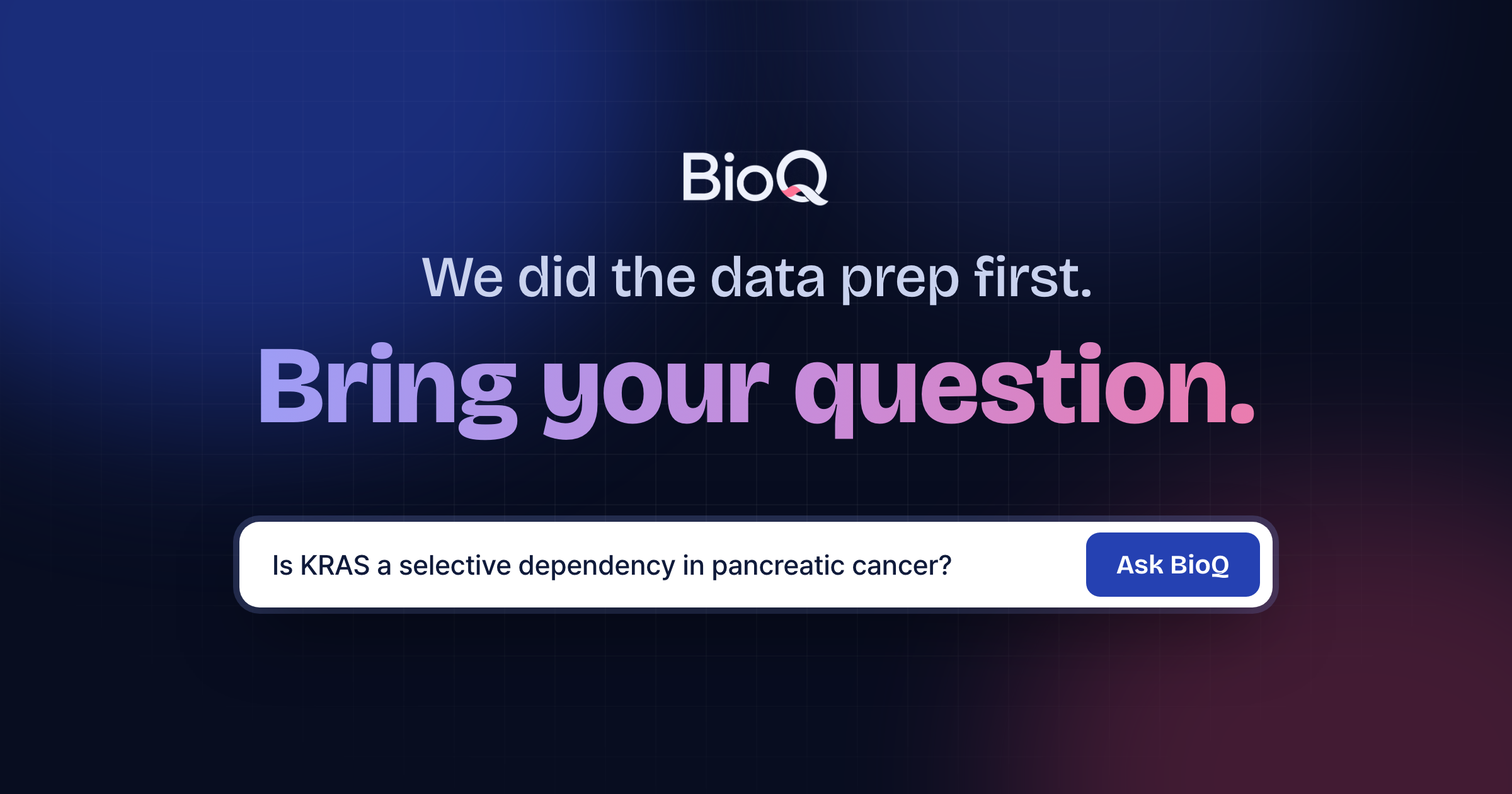
AI3 Discovery met the same preparation in its own research, so we did it ahead of time, and the result is BioQ. We loaded 97 public biology databases after checking them against their sources, indexed them so they can be queried directly, and cross-referenced the records by identifier. The data is gathered; you only need to bring your question.
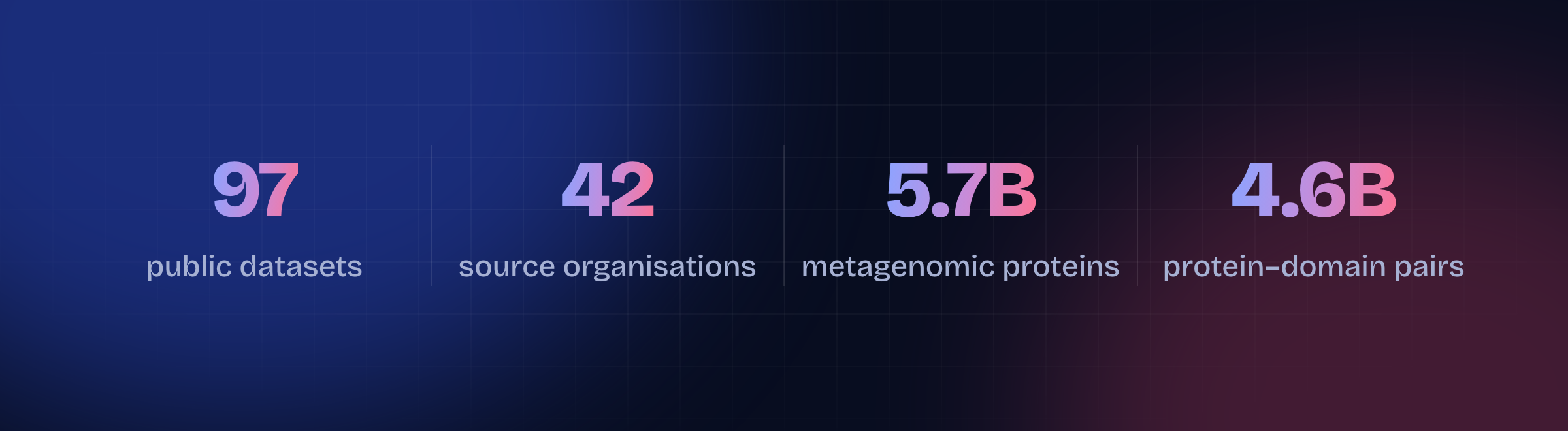
UniProt, PDB, AlphaFold DB, ChEMBL, ClinVar, STRING, DepMap, GTEx, the Human Protein Atlas and more. 97 public datasets that researchers use, with nothing to download and no identifiers to match by hand. The full list and sources are in the data catalog.
Ask in plain words
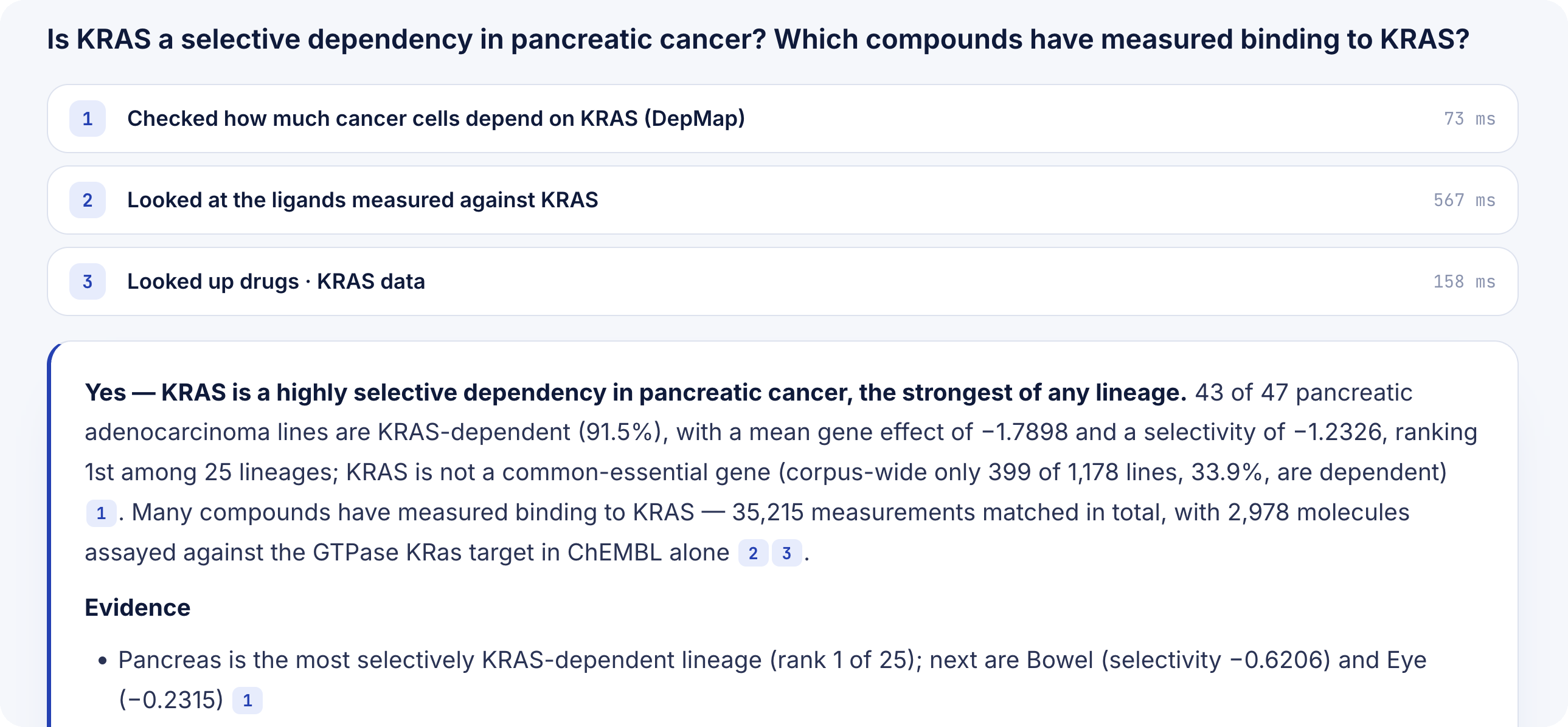
Figure 1. One question, an answer with its sources. Pancreas ranks 1st of 25 lineages for KRAS dependency selectivity (−1.2326; 43 of 47 cell lines), against 33.9% of all 1,178 cell lines.
Ask, and the agent picks the layers it needs, queries them in one pass and cites the record behind each figure. It states the limits of its answer too. Use cases show how it is used in research and how it differs from other tools.
Layers, stacked
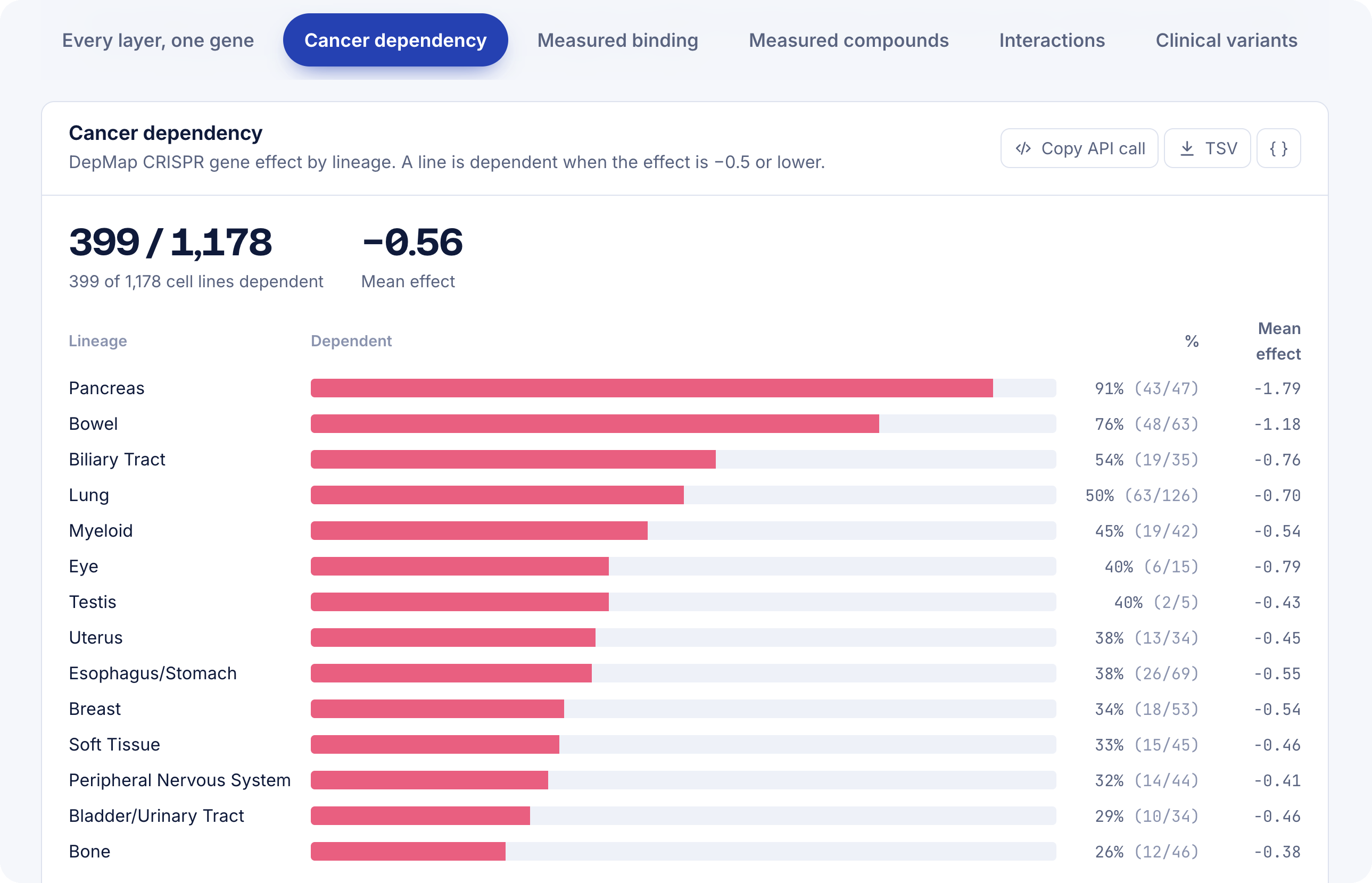
Figure 2. Cancer dependency of KRAS by lineage. The share of cell lines that depend on it (DepMap CRISPR).
Search one gene and cancer dependency, measured binding, interactions, clinical variants, expression, structure and immune-cell subsets follow as tabs. Enter a UniProt accession and, of the 97 layers, those that take that accession answer in one go. For CD19 (P15391), 15 layers answered and 12 returned a record. Finding which databases know an identifier takes about 3.3 hours by hand (checking ≈1.2 TB of archives) and 0.33–0.37 s in BioQ (six such comparisons, using download rates measured from public archives; yours may differ). Per-layer status is on the system status page.
So that it is not wrong
- Indexes are reconciled with the source records (totals are asserted), and a build that disagrees does not ship.
- At every deployment it runs known-answer tests, and if one is wrong, the service does not open.
- An answer falls into one of four states: a record is there (re-read and compared byte for byte), looked and not there, cannot be asked of this dataset (a different identifier system), and not checked. Not checked is not evidence of absence.
- A pasted sequence is never passed to the AI model (the model receives a placeholder such as [SEQ1]), and conversations are stored only in your browser (privacy policy).
Three questions to ask it today
- Type in the UniProt accession of the protein you are working on, in the BioQ search box. In one pass you see how many layers know it and which have not looked yet. The empty spots on that map may be your next research question.
- Paste a sequence you have. BioQ finds homologous reviewed proteins in Swiss-Prot with E-values and percent identity, and checks for an exact match among 129 million MGnify representative sequences.
- Browse the large protein families with no known Pfam domain. There are 5,890,193 MGnify clusters with five or more members and no Pfam domain. Filter them by biome and size.
At bioq.bio you sign in with an email address, with no card and no approval step, and there is a free monthly allowance. It connects to Claude, ChatGPT and Cursor over MCP, and every layer of the engine can also be called through the API.
Finding, gathering and matching data is not research. It is preparation that comes before research, and we have done it for you. You can concentrate on the research.
Figures are from the BioQ catalogue (updated 15 November 2026) and the editorial of the 2026 Nucleic Acids Research database issue (doi:10.1093/nar/gkaf1427).