AI3 Discovery builds computational tools for protein design, structure prediction and biological search. Tools like these can speed up medicine, and the same capabilities can be misused. This page states what our tools will and will not produce, and the review every public release passes first.
AI3 has signed the community commitments of Responsible AI x Biodesign. This policy is how we put them into practice. It is owned by Chulmin Pyo, CEO and Head of Research.
Scope
The policy covers everything AI3 Discovery releases outside the company:
- Papers and preprints.
- Datasets, including designed sequences and structures.
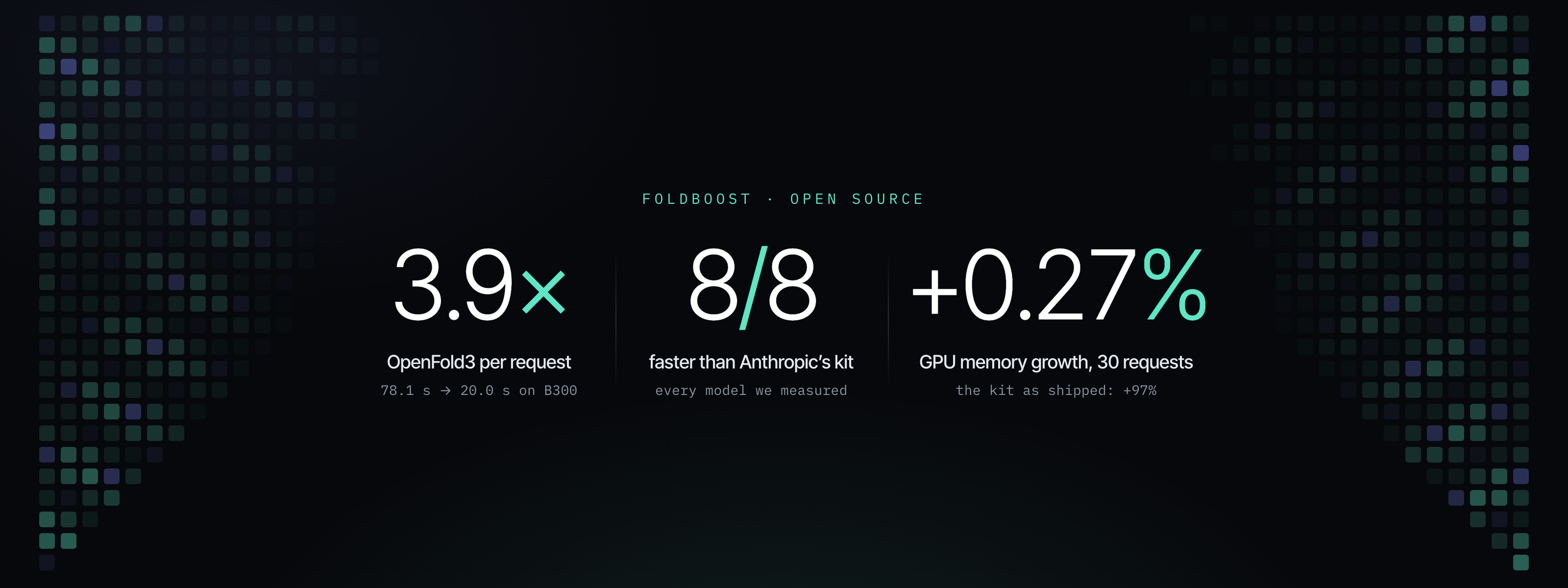
- Open-source and hosted tools, such as FoldBoost.
Our research is computational. We do not operate a wet laboratory, and we do not synthesize DNA or proteins.
What our tools will not produce
- Designs, optimization or ranking of sequences or structures for agents and toxins regulated by a government body or listed by the Australia Group, such as the US Select Agent list.
- Work whose purpose is to raise a biological agent's transmissibility, pathogenicity, host range, ability to evade immunity, or resistance to countermeasures.
- Work on aerosolization, environmental persistence, formulation or delivery of such agents.
- Help to test or get around biosecurity controls, including DNA-synthesis screening, biosafety containment and model safeguards.
- Models trained or fine-tuned to predict how a pathogen or toxin harms a host or population.
If a request or a result falls into one of these, we stop that work and keep the record.
Pre-release dual-use review
Nothing leaves the company until it passes this review, and the outcome is written down.
- Describe the release. What is being released (a paper, a dataset, designs or a tool), and what a recipient could do with it that they could not do before.
- Screen the content. Every sequence and structure in the release is checked against regulated-agent and toxin lists and against databases of sequences of concern. A hit blocks the release until it has been reviewed and explained.
- Check what a tool adds. For a tool that accepts user input, such as a design or structure-prediction tool, ask whether it gives meaningful help toward hazardous work beyond the published models it builds on. If it does, we redesign it or do not release it.
- Decide in writing. The decision is one of three: release, release with changes (for example withholding sequences or limiting access), or do not release. The record carries the date, the reasons and the person who decided, and we keep it.
- Sign off. No release goes out without a recorded sign-off. Today the sign-off is given by the CEO and Head of Research.
- Review again when a released tool changes in a way that affects what it can do, and review this policy at least once a year.
If someone wants to make a design physically
We do not order or produce synthetic DNA ourselves. We advise anyone who builds on our designs to use providers that follow the IGSC Harmonized Screening Protocol or the HHS synthesis-screening framework.
Reporting a concern
If you think something we released could be misused, tell us through the Partner With Us page and say "dual-use concern" in the message. We will review it and respond.
Version 1.0, effective 11 November 2026.