189,630 bacterial genomes. From them we pulled more than 120,000 places where a reverse transcriptase (RT) sits and checked each one against the known family tree. Most belonged to a family somewhere. But some groups never fit anywhere, and beside one of them stood the same set of genes, in the same order, in the same positions.
That group turned up in 16 bacterial genomes taken from lakes, rivers and ponds in nine countries on five continents: Canada, Switzerland, Korea, Chile, Rwanda, Israel, the USA, India and China. All 16 belong to a single genus of bacteria, Pollutibacter.
We call the enzyme ESOL RT and the genes beside it the ESOL cassette. This is the story of that discovery, and of a question nobody can answer yet. Why does this enzyme never travel alone?
A reverse transcriptase runs life's arrow backwards
Genetic information normally flows from DNA to RNA to protein. A reverse transcriptase (RT) turns that arrow around: it reads RNA and writes DNA. Retroviruses such as HIV rely on one, and so does the telomerase in our own cells.
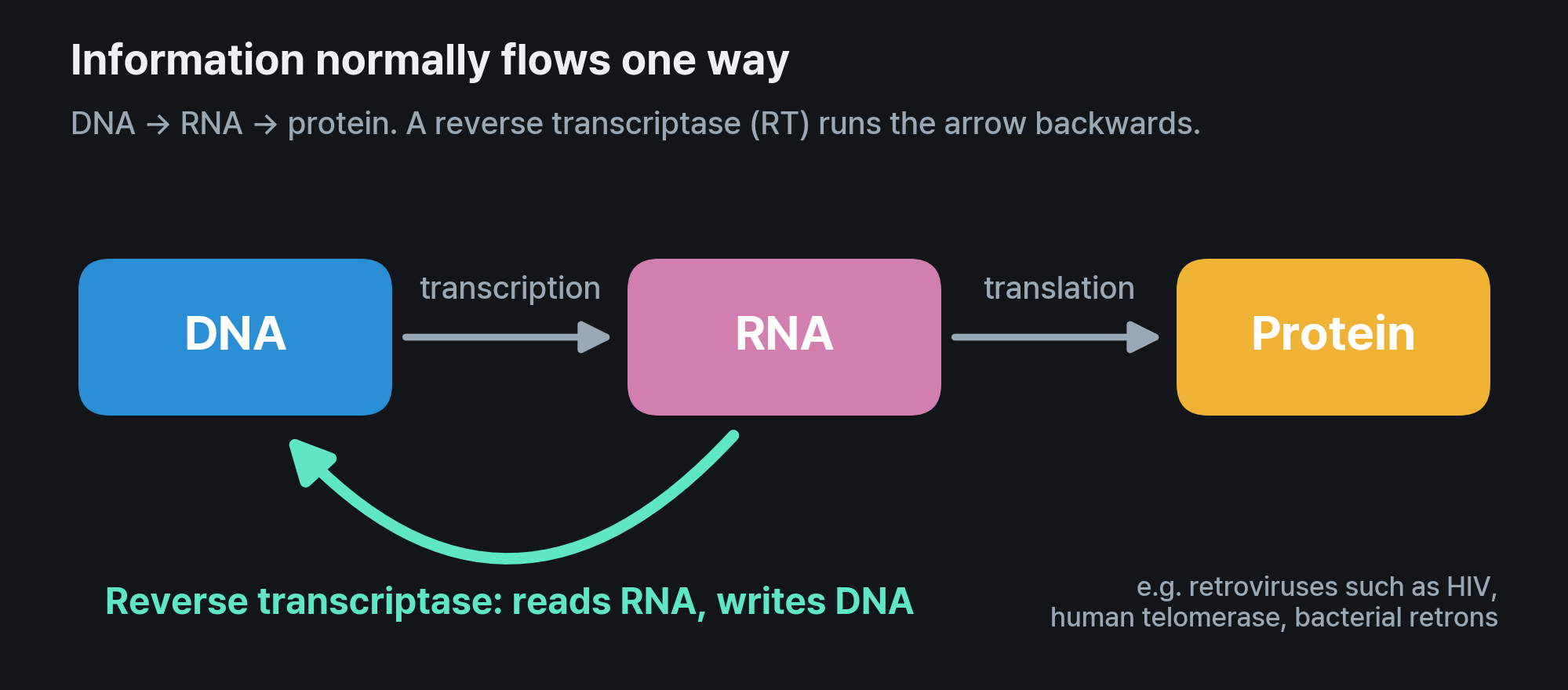
Figure 1. What an RT does. It runs the flow of information backwards.
Bacteria carry plenty of RTs. They go by names such as group II introns, retrons, diversity-generating retroelements (DGRs) and the UG/Abi families, and many work for their host. Retrons and several UG/Abi and DRT groups guard the cell against phages, the viruses that infect bacteria. DGRs keep rewriting a target protein to generate diversity, and some RTs are fused to Cas1 and pick up CRISPR spacers straight from RNA.
An enzyme that is on nobody's family tree
A survey of bacterial genomes sorted RTs into 17 main groups. The UG/Abi family alone has since been divided into 42 groups, and RTs linked to CRISPR systems into 15 clades. The numbers depend on the classification and cannot be added up, but the tree is clearly well filled in.
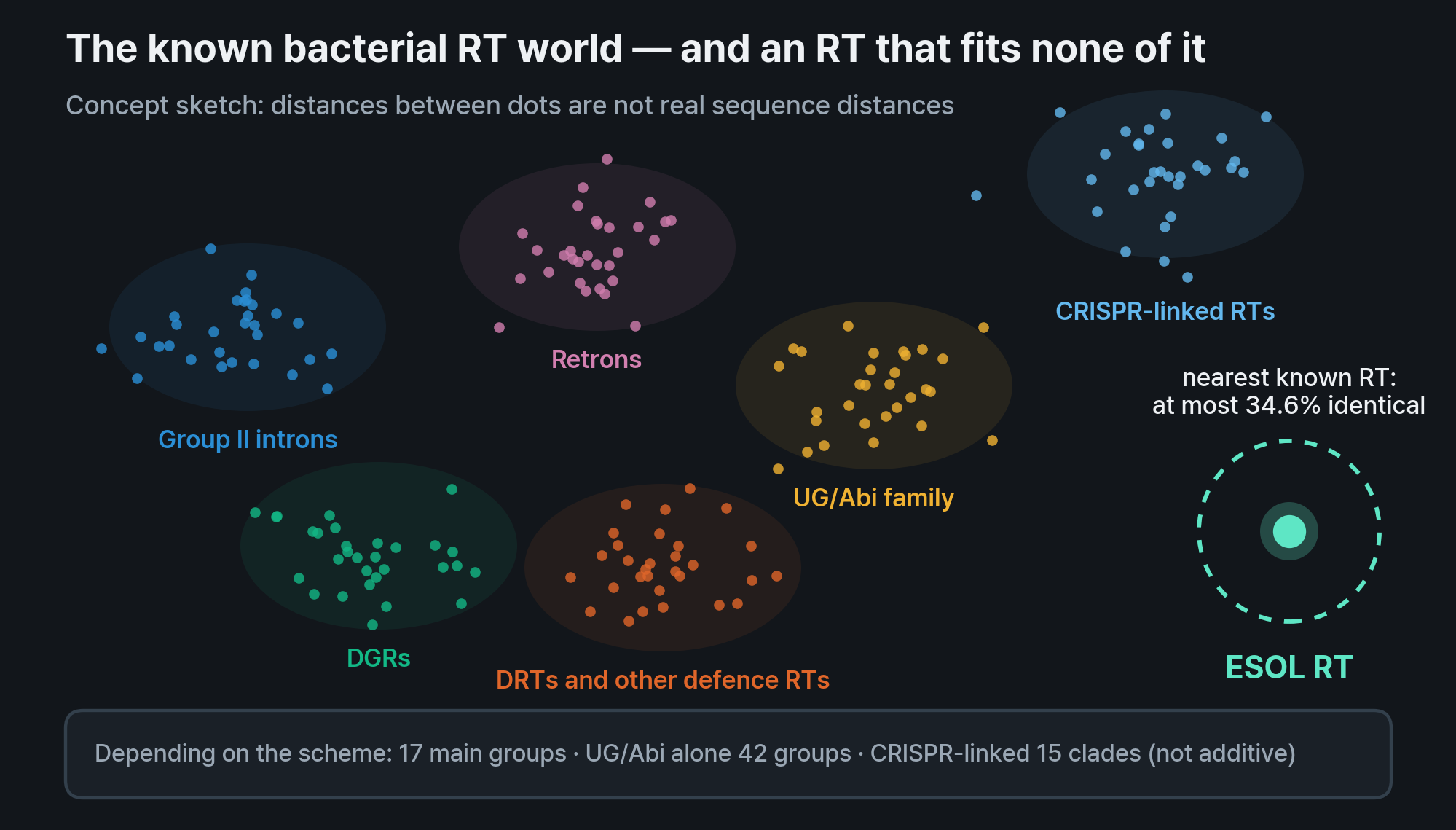
Figure 2. The known RT world and ESOL RT (concept sketch). Distances between dots are not real sequence distances. ESOL RT is at most 34.6% identical to the nearest known RT in our library.
Our question was simple: what does that well-filled tree leave behind? So we kept only the RTs that no known family would take.
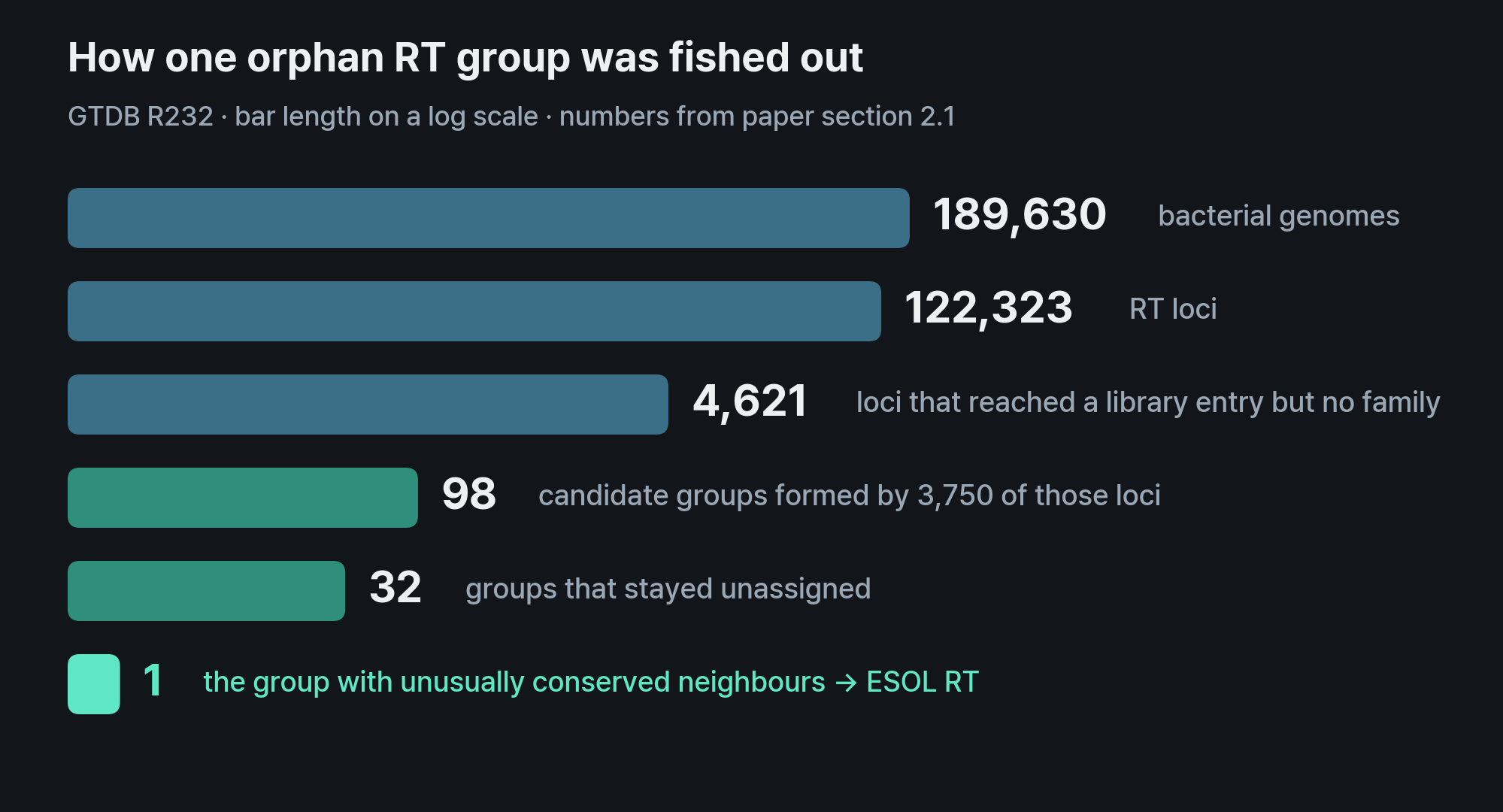
Figure 3. How one orphan RT group was fished out. Bar length is on a log scale.
From 189,630 genomes we collected 122,323 RT loci. 109,524 of them matched a known family. Another 4,621 reached an entry in our library but no family, and 3,750 of those formed 98 candidate groups, 32 of which stayed unassigned. One of the 98 stood out, because the genes beside it were unusually constant. That one is ESOL RT.
No known family would take it. A direct comparison with known types, a phylogenetic tree and a predicted three-dimensional structure all failed to place it, and the defence-system classifiers (DefenseFinder and PADLOC) did not call it a retron, a DRT or an Abi system. Nine unassigned candidate clusters from an untargeted hunt of our own sit at 32 to 50% identity (cluster medians) to their nearest known RT; ESOL RT has a median of 29% and a maximum of 35%, which makes it even more isolated, although the alignments differ in coverage and the comparison is approximate. In predicted structures its nearest known neighbour lies in the direction of DRT10, but the paper is explicit that this is a direction and not a membership.
We do not call this enzyme a "new lineage". In this project, groups that looked unassigned sometimes turned out to match published families that were missing from our library. So we say it this way: by every comparison we ran, it is an "orphan RT" for which we could not find a family. The missing family is itself the clue. (The name ESOL is just a shorthand from an early stage of the project and carries no claim of a lineage.)
The real story was next door
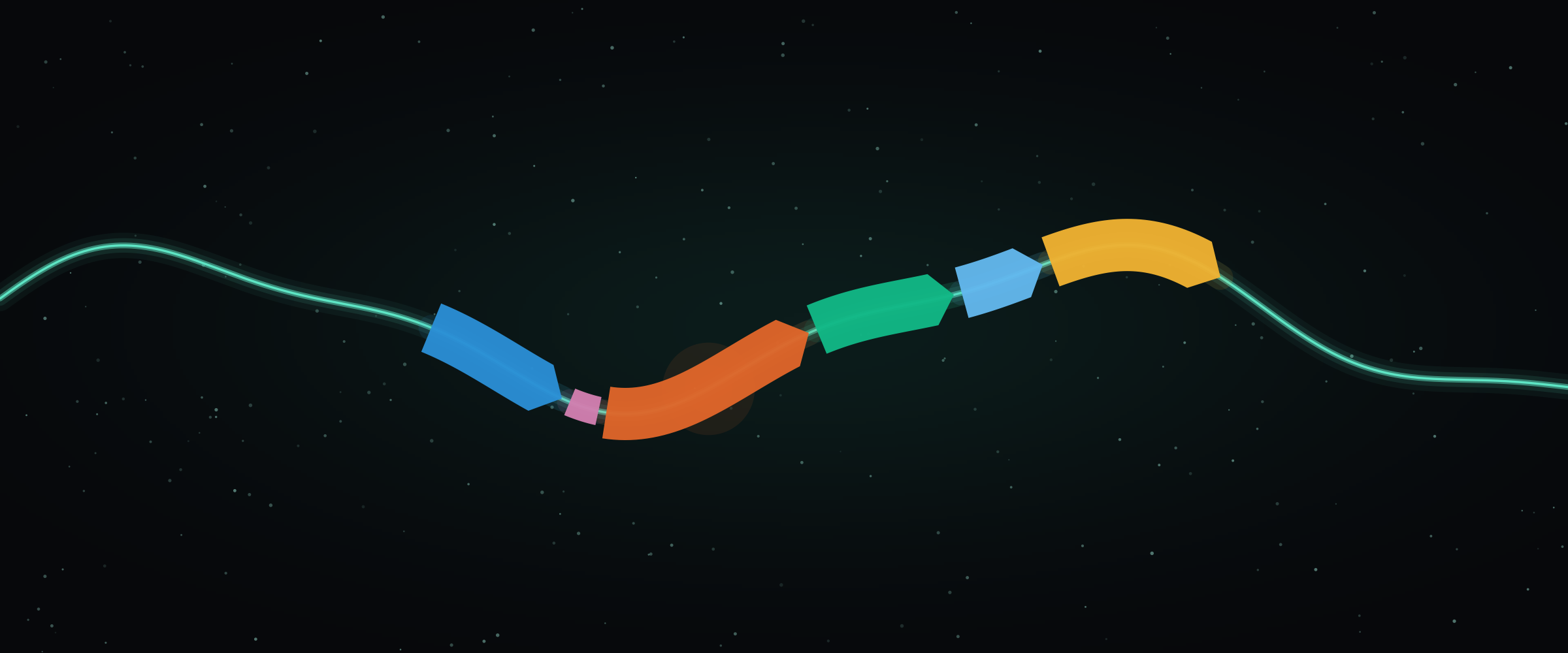
One lonely RT is not much of a story. What caught our eye was its neighbourhood. The paper calls it a cassette. In plain words, it is a companion gene set: the genes the RT keeps in the same positions everywhere it goes, slotted in as one unit like a cassette tape.
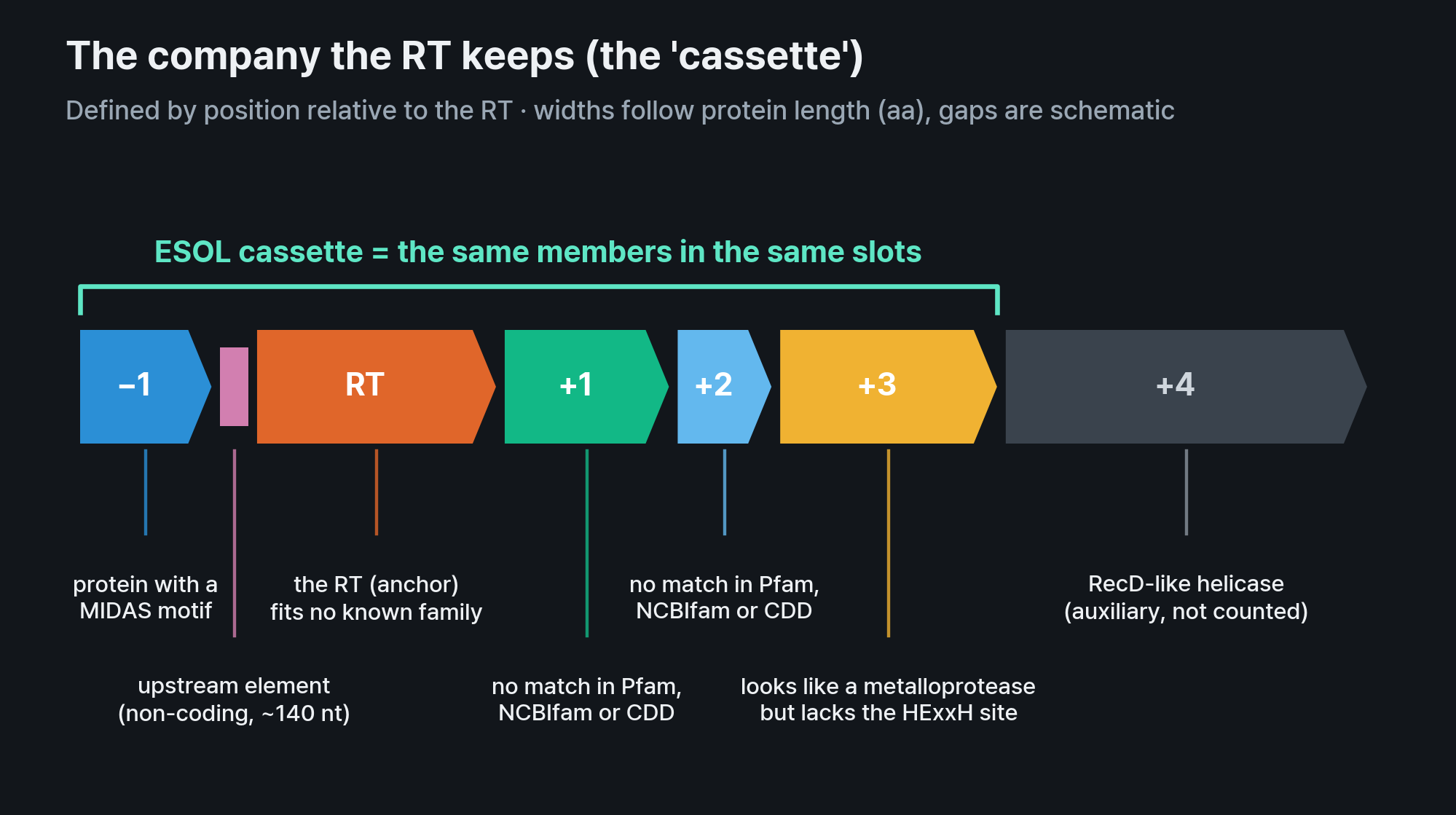
Figure 4. The ESOL cassette. Defined by position only. Widths follow protein length; gaps are schematic.
The members, one by one:
- Upstream element. A non-coding stretch of about 140 nucleotides. It is not made into protein, and we do not yet know what it is.
- The −1 protein. It carries a MIDAS motif, a metal-ion binding site, in every copy we could evaluate.
- The +1 and +2 proteins. No match in the protein databases we searched (Pfam, NCBIfam, CDD).
- The +3 protein. Predicted to fold like a metalloprotease, a protein scissors, yet it lacks the core site (HExxH) that cutting needs. Is it scissors, or something shaped like scissors?
- The +4 gene. A RecD-like helicase, an enzyme that unwinds DNA. We do not count it as a member, but in the copies we could observe it is intact.
The anchor RT has no family, and the three proteins beside it found no match in the major protein databases. A team in which almost nothing can be named travels in single file.
RTs that work with partners are well known. But among the 32 groups that stayed unassigned in our census, this was the only one that stood out as an unclassified RT keeping the same unnamed proteins, in the same places, as one team.
Five continents of water, one genus
The 16 genomes carrying the set came from 16 different samples: six lakes, three from a single river, two ponds, and five described only as freshwater, surface or aquatic water. The samples come from 10 separate submission projects and are scattered across nine countries and five continents.
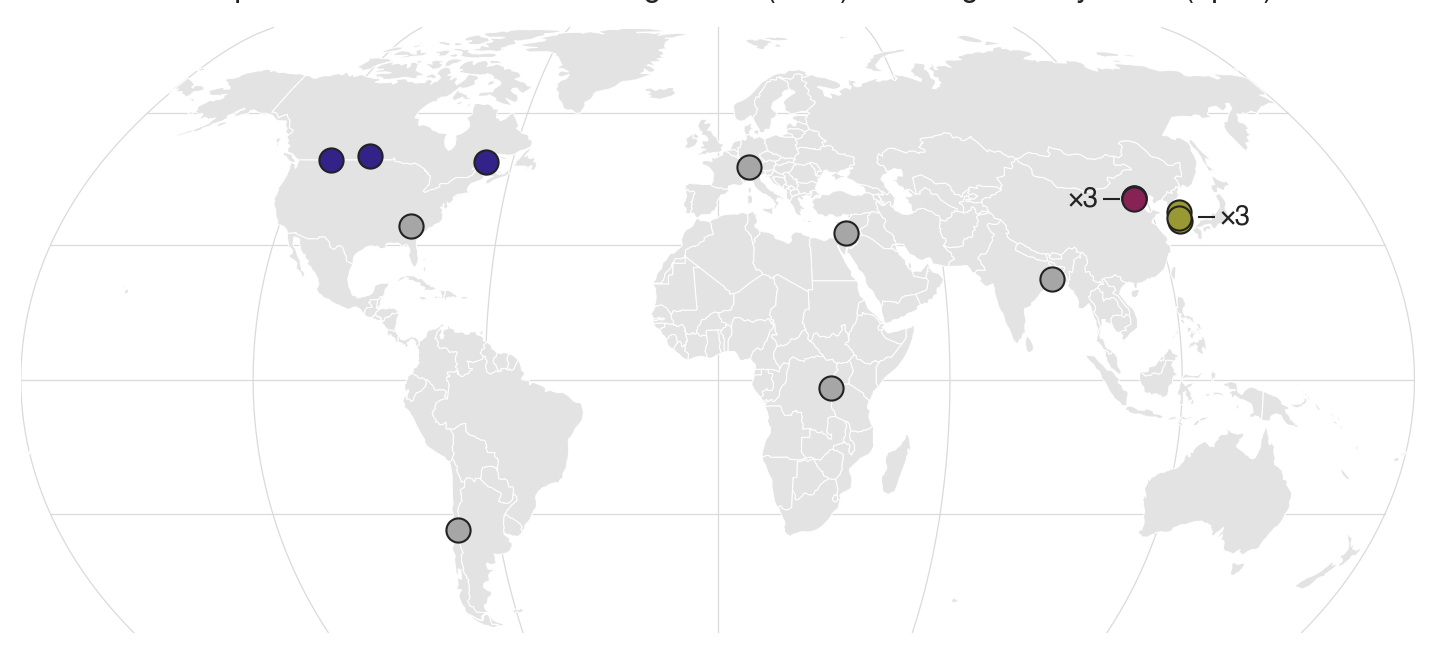
Figure 5. Where the 16 cassette-bearing genomes came from (paper Figure 8A). The 15 samples with recorded coordinates are plotted. Colour marks a shared submission project.
Yet all 16 belong to one genus, Pollutibacter, in the phylum Bacteroidota. Across the globe, but within a single narrow lineage. Within the range we searched, the cassette was not found outside this genus. The map shows where the cassette was found, not how common it is.
Could it be a coincidence? We opened 27 more RT loci in 24 genomes of this genus, beyond the original 16. Of 99 observable slots beside the RT, 97 held a cassette part. Both exceptions sit at one locus, whose RT is only 38.8% identical to the cassette RT.
Signs that this is no accident
No broken copies. A gene set that is decaying should show damaged copies. We checked every observable copy at 22 assembled loci and found not a single frameshift, premature stop codon or truncating deletion.
Selection is holding it in place. The codon-model ω values of the members fall between 0.084 and 0.185, far from the neutral value of 1 in the purifying direction. The sequence is being kept from changing. This is not evidence of function, but it is the kind of signal you expect from something in use.
One unassembled long read crosses the whole set. To rule out an artefact of assembly, we went to long reads in public sequencing data, before any assembly.
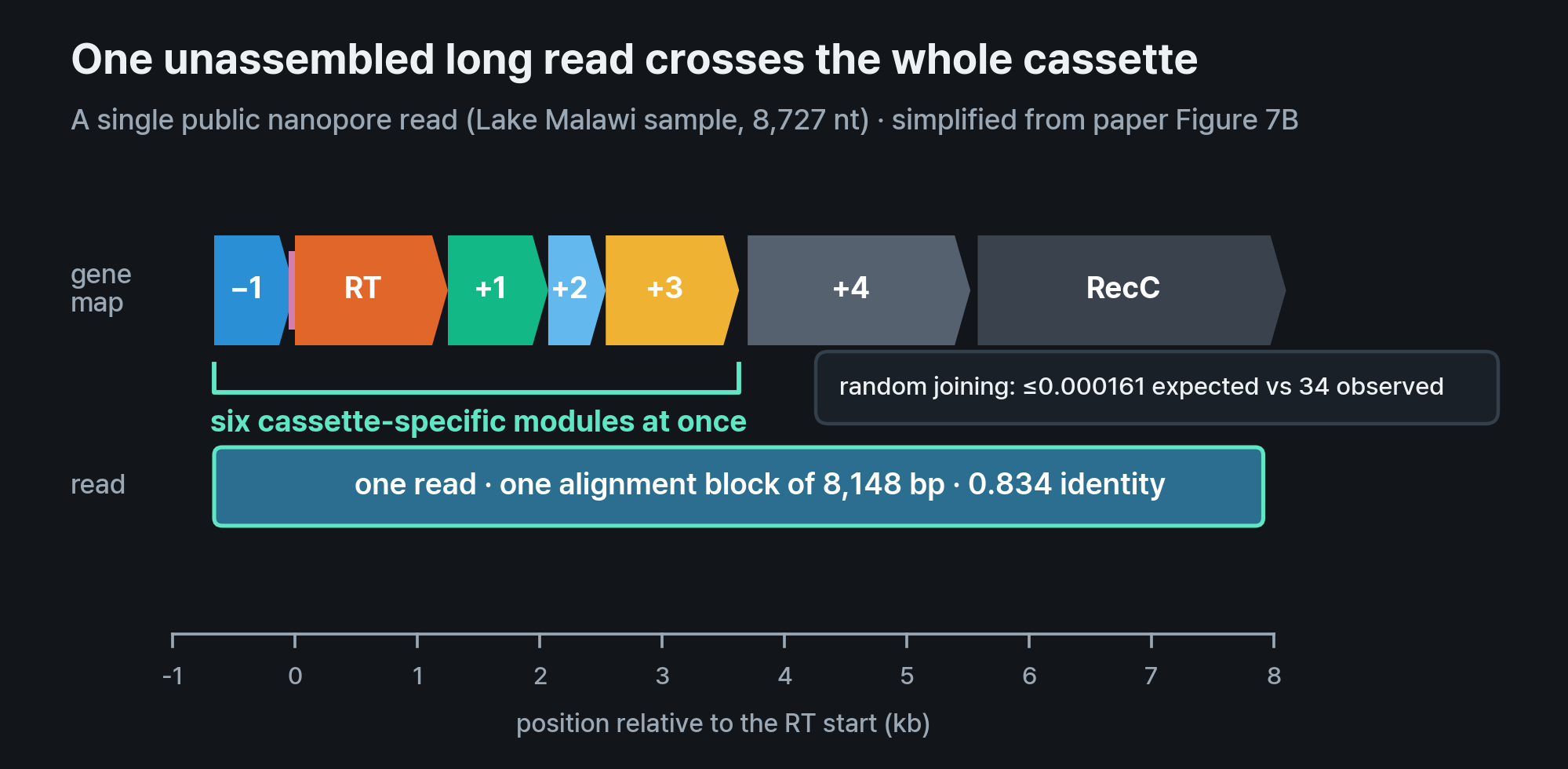
Figure 6. A single read covers six modules at once. An 8,727-nucleotide read from a Lake Malawi sample spans the six cassette-specific modules, from −1 to +3, in one piece.
Even if every cassette read were a chimera of two molecules joined by chance, random joining would give at most 0.000161 reads covering two or more modules. Public data contain 34.
Two pieces that meet in only one place
Here the puzzle deepens. Parts of this set travel without the RT in other genera.
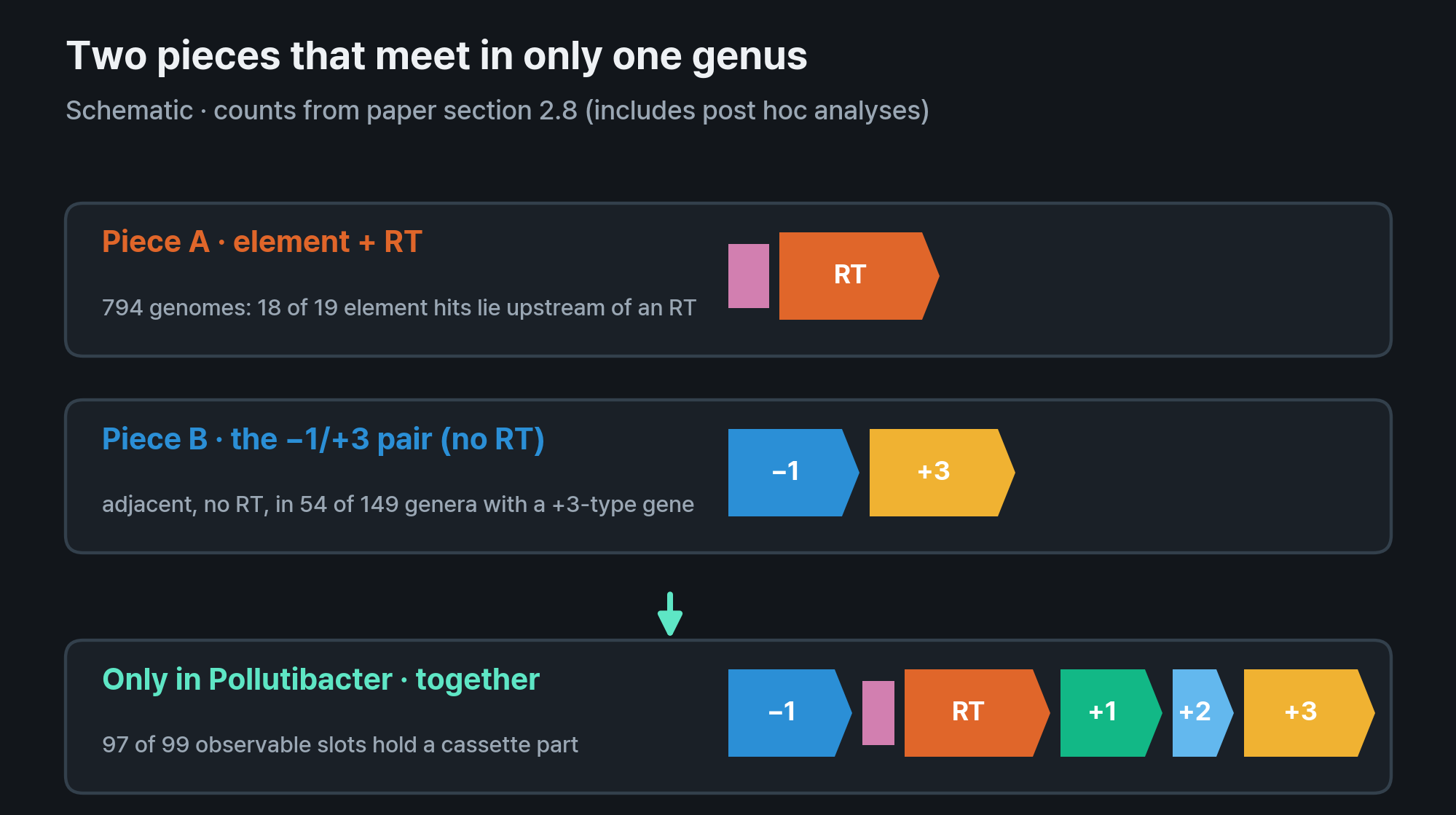
Figure 7. Two pieces that meet in only one genus (schematic).
The −1 and +3 genes occur as an adjacent pair with no RT nearby in 54 of 149 genera that carry a +3-type gene. The upstream element, in contrast, kept company with an RT. In a post hoc search of 794 genomes, 18 of 19 element hits lay upstream of an RT, and the 19th had its RT side cut off by the end of the contig.
So the set looks like two pieces that already existed apart, and met. One is the element plus the RT, the other is the −1/+3 pair. As far as we know, only Pollutibacter holds both together. That splits the question in two.
- Origin. Did the RT join a module that already existed, or did the unit arise as a team?
- Function. Does this RT work with the company it keeps?
What might this team do? The hypotheses we are betting on
That RTs work in teams with partners is being uncovered quickly. Four preprints from three research groups describe DRT10 as a system of three parts, a structured non-coding RNA, a SLATT protein and an RT, and two of them report that all three were required for defence in E. coli. A study in Cell this year reported that loss of the host DNA-processing enzyme RecBCD is lethal in the presence of DRT3, and loss of ExoI in the presence of DRT9. A preprint on phage-defence systems describes their components as frequently exchanged between gene clusters, like interchangeable parts.
If the ESOL cassette belongs to that world, what pictures are possible? These are our hypotheses. None has been tested yet.
| Hypothesis | The picture | Clues so far | Ways to tell (examples) |
|---|---|---|---|
| A defence team | The upstream element (an RNA?), the neighbouring proteins and the RT work as one system. | Precedent of three-part systems like DRT10; predicted structures point toward DRT10 (but no SLATT protein was found in the cassette genomes) | 5′-end map of the RT transcript; knock-out of single members |
| Working with a host enzyme | The RecD-like +4 helicase meshes with the host's DNA-processing enzymes. | The DRT3/DRT9 precedents with RecBCD and ExoI | Response in strains lacking the host gene |
| What the +3 protein is | A scissors-shaped protein that does not cut, but binds a regulatory DNA sequence. | Conserved under selection without the core site; a palindrome upstream of −1 | Activity assay of the +3 N-terminal domain |
| Modular parts | The RT hopped onto an old −1/+3 module and can no longer be separated. | RT-free pairs exist in 54 genera | Rooted trees to tell the direction; finding a second genus |
| What the element is | A non-coding RNA like a retron's msr/msd, or an entirely new kind of RNA. | Always sits upstream of the RT | Structure and transcript analysis |
Why does this make our hearts beat faster? Bacterial defence systems have repeatedly stocked biotechnology's toolbox. CRISPR is the famous case, and retrons are being developed into genome-editing tools. Whether the ESOL cassette turns out to be a new immune system or a different way of making DNA altogether, working out how a nameless enzyme works widens the map of molecular biology. It is no promise that this set becomes a tool. But tools have always started with nameless enzymes.
What we know, and what we don't
Plainly:
- What we know. The position and composition of the RT, that the genes beside it are intact, and that they travel together in 16 genomes from one genus in the water of five continents plus 27 further loci.
- What we don't. What the set does, how it moves, where it came from, and whether it exists outside Pollutibacter. The paper reports no wet-laboratory results.
- Caveats. 31 of the 34 multi-module long reads come from one PCR-selected study. Our pipeline tends to miss RTs that have a known relative (it re-found only 4 of 37 published lineages when we removed them), so we are not saying that no other candidates exist.
The observations that would settle the questions are already set: a second genus carrying the same parts, a structure-based placement of the RT, rooted trees that give the direction, a 5′-end map of the RT transcript, and an activity assay of the +3 N-terminal domain. Constructs, primers and controls are designed and checked in silico, and wet-laboratory experiments are under way.
The paper and its supporting data are open
The paper is available as a preprint: Why does a gene cassette keep the company of an orphan reverse transcriptase? Pollutibacter on five continents — Research Square, DOI 10.21203/rs.3.rs-11420391/v1, CC BY 4.0, 36 pages plus supplementary files. The paper has been submitted to a journal and has not yet been peer reviewed.
The data behind the paper are deposited in Zenodo (CC BY 4.0, DOI 10.5281/zenodo.23346665): the Supplementary Information PDF, supplementary tables and data, the source data of the figures, the sequences of the 16 seed assemblies and per-locus annotations (GFF3), the detector model files, and the decision thresholds, build commands and tool versions, 37 files in all. Anyone can check our numbers against them and run the same detectors on other genomes.
This work was done with the AI3 Discovery scientific-discovery harness and AI tools (Claude and GLM models). The author supervised all of it and is responsible for all content.
Let's accelerate the next discovery together
This story began by fishing one nameless enzyme out of 189,630 genomes. Public data still hold things nobody has looked at. AI3 Discovery uses AI to find them, doubts its own results first wherever it could be wrong, and publishes only what has been checked.
We are looking for researchers who want to work out what the ESOL cassette is, and teams who want to take on other questions the same way. Research with AI3 Discovery and accelerate scientific discovery.